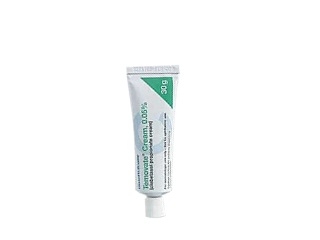
Clobetasol 0.05% (Dermal/Cream/Ointment/Lotion) — Patient Information
Clobetasol 0.05% is a very strong (high-potency) corticosteroid medicine used to reduce inflammation and relieve symptoms such as redness, itching and swelling in certain skin conditions. Because it is powerful, it should be used only as directed by your healthcare professional and for the shortest time necessary to control your condition.
This page provides patient-friendly information about how clobetasol works, typical uses, practical tips, possible side effects, and key safety precautions relevant to people in Australia.
Basic product information
- Active ingredient: Clobetasol (typically as clobetasol propionate 0.05%)
- Strength: 0.05% topical corticosteroid
- Formulations available: Cream, ointment, and lotion (varies by product brand)
- Drug class: Corticosteroid (topical, high potency)
- What it treats: Inflammatory skin conditions responsive to corticosteroids
- Where it is applied: Usually to skin only (avoid eyes and inside body openings)
Note: Always check the specific brand instructions on the pack or product leaflet for exact directions for your formulation and strength.
How clobetasol 0.05% works (mechanism of action)
Clobetasol is a topical corticosteroid. It helps to:
- Reduce inflammation: by calming inflammatory immune responses in the skin.
- Decrease itching and redness: by reducing release of inflammatory chemicals.
- Suppress abnormal immune activity: that drives flare-ups in steroid-responsive dermatoses.
Because it is a very strong steroid, clobetasol can act quickly when used correctly—however, strong anti-inflammatory effects can also increase the risk of local skin side effects if used too long or on sensitive areas.
Pharmacokinetics (how the body handles it)
After applying clobetasol to the skin:
- Absorption: Absorption through the skin can vary. It is generally low when used on intact, healthy skin, but can increase when applied to:
- broken or inflamed skin
- large areas
- under occlusion (covered with bandages/plastic)
- thinner skin areas (e.g., face, groin, underarms)
- in children
- Metabolism: Like other corticosteroids, clobetasol is metabolised primarily in the body after absorption.
- Systemic effects: With appropriate use, systemic absorption is usually limited, but frequent or prolonged use can lead to measurable steroid effects in the body (including effects on hormones).
Practical takeaway: Use the smallest amount for the shortest time, avoid occlusive dressings unless advised, and avoid using on large areas unless specifically instructed.
Typical use and timing
Clobetasol is commonly used to manage short-term flare-ups of inflammatory skin conditions. Typical symptom improvement may be noticed within a few days, but it is important to continue exactly as directed even if symptoms improve quickly—unless your clinician tells you to stop.
When to apply
- Often applied once or twice daily, depending on the condition and product directions.
- Apply to the affected area only, using a thin layer.
- Use on clean, dry skin unless otherwise instructed.
For how long
- High-potency steroids like clobetasol are generally intended for limited duration.
- If there is no improvement within a few weeks (or sooner for some conditions), seek medical advice rather than continuing.
- Your prescriber may use a step-down approach (reducing frequency or switching to a lower-potency steroid) once control is achieved.
Reminder: Avoid long-term continuous use of clobetasol unless specifically instructed.
Food interactions
No direct food interactions are expected with topical clobetasol because absorption into the bloodstream is usually limited. However, if you are using other medicines that affect steroid levels, have a condition affecting absorption, or are applying to large areas, discuss your overall regimen with a healthcare professional.
Alcohol and medicine interactions
Alcohol
There are typically no specific alcohol interactions with topical clobetasol. However, avoid excessive alcohol intake if you have conditions that affect healing, skin integrity, or overall immune health, and follow general health advice.
Other medicines
Topical clobetasol can interact indirectly with other treatments mainly through:
- Other corticosteroids: Using additional steroid products (especially other topical or oral steroids) may increase steroid exposure and side effects.
- Immunosuppressive medicines: If you use systemic immunosuppressants, any steroid absorption may increase infection risk.
- Vaccines and immune-modifying treatments: While this is not a typical topical concern, systemic absorption in overuse can potentially influence immune response.
Important: If you are uncertain about combining clobetasol with other skin treatments (e.g., moisturisers, antifungals, antiseptics, retinoids), ask your pharmacist or doctor. Some products may increase irritation or affect how long you should leave treatments on.
Indications (what it’s used for)
Clobetasol 0.05% is used for inflammatory, corticosteroid-responsive dermatoses where a very potent steroid is appropriate. Common examples may include:
- Severe eczema/dermatitis that requires high potency (short-term)
- Psoriasis (in selected cases and with careful supervision)
- Other inflammatory skin conditions where a doctor determines that a high-potency topical steroid is needed
Not for all skin problems: Clobetasol should not be used for undiagnosed rashes. It may worsen certain infections (see “Safety profile” below) and can mask symptoms.
Dosing (how much and how to use)
Dosing depends on the specific condition, body area, and formulation. As a patient guide, the typical approach is:
- Use a thin layer that rubs in gently.
- Apply to the affected skin only.
- Wash your hands before and after applying (unless treating the hands).
- Do not apply more often than directed.
How much to apply (fingertip unit guidance)
Many clinicians use the “fingertip unit” concept to estimate topical steroid amounts:
- A fingertip unit (FTU) is the amount of ointment/cream expressed from a standard tube along the length of an adult’s fingertip.
- One FTU is often used to cover an area about the size of two adult palms.
Because clobetasol is potent, do not assume typical dosing for milder steroid creams applies to clobetasol. If you were given specific instructions, follow those.
Special areas and sensitive skin
- Avoid clobetasol on the face, groin, axillae (underarms), or on thin skin unless specifically instructed—these areas are more prone to side effects.
- Do not use on infected skin unless an infection is being treated at the same time as the steroid (see safety section).
Safety profile (side effects and key warnings)
Clobetasol is a high-potency topical corticosteroid. When used correctly for short durations, it can be effective and generally safe. However, steroid overuse or use in the wrong situation can cause problems.
Common local side effects
- Skin irritation or burning/stinging on application
- Dryness
- Itching may change temporarily
- Redness or rash at the application site
Less common but important local effects (especially with prolonged use)
- Skin thinning (atrophy)
- Stretch marks (striae)
- Visible small blood vessels near the surface (telangiectasia)
- Worsening pigmentation changes
- Perioral dermatitis or worsening around the mouth (more common with face use)
- Acne-like eruptions or folliculitis
Systemic effects (rare with appropriate use)
Because clobetasol can be absorbed, excessive use (large areas, occlusion, prolonged duration) can increase the risk of systemic corticosteroid effects, such as:
- Suppression of the body’s natural steroid production (HPA-axis suppression)
- Effects on growth in children
- Cushingoid appearance with significant overuse
Infection risk
Topical steroids can mask signs of infection and may worsen certain infections. Contact a healthcare professional if you notice:
- Increased redness, pain, swelling, oozing or crusting
- Fever or rapidly spreading rash
- Rash not improving as expected
Avoid using clobetasol on suspected untreated fungal (e.g., ringworm), viral (e.g., cold sores), or bacterial skin infections unless directed with appropriate treatment.
Who needs extra caution
- Children: Higher risk of absorption and growth effects. Use only if advised, with special attention to dosing and duration.
- Pregnancy and breastfeeding: Topical steroids may be used in some situations, but discuss risks and benefits with a healthcare professional—especially for prolonged use or larger areas.
- Older adults: Thinner skin may be more vulnerable to atrophy and bruising.
When to stop and seek advice
- If symptoms worsen quickly
- If there is no improvement after the expected time
- If you suspect infection
- If you develop significant skin thinning, unusual marks, or severe irritation
Practical use tips (how to get the best results safely)
- Use the “thin layer” rule: More is not better; a thin layer reduces side-effect risk.
- Apply only to affected skin: Avoid spreading onto surrounding normal skin unnecessarily.
- Don’t cover unless instructed: Occlusion (covering with plastic/bandages) can increase absorption and side effects. Avoid unless told to use it.
- Moisturise smartly: If you’re also using emollients, apply moisturiser first, wait briefly, then apply clobetasol as directed (or separate applications as advised).
- Keep routines consistent: Using at the same time each day can help you follow the plan.
- Hand hygiene: Wash hands before and after use to prevent transfer to eyes or other areas.
- Avoid eyes and mucous membranes: Do not apply to eyelids, eyes, inside the mouth, or genital mucosa unless specifically instructed.
Alternative options
Depending on the diagnosis and severity, alternatives may include:
- Lower-potency topical corticosteroids (e.g., for maintenance or less severe flares)
- Topical calcineurin inhibitors (commonly used for sensitive areas such as face/groin)
- Non-steroidal anti-inflammatory skin treatments (condition-dependent)
- Antifungal/antibacterial treatments if infection is present or suspected
- Phototherapy for selected chronic conditions such as some cases of psoriasis, under specialist care
- Emollients and moisturisers as foundational treatment for eczema-related dryness and barrier repair
Your pharmacist or doctor can help determine the most suitable option based on the specific skin condition, area of the body affected, and how long the treatment needs to last.
Clobetasol 0.05% in Australia: market and legal context
In Australia, topical corticosteroids are regulated in line with the Therapeutic Goods Administration (TGA) framework and classification requirements. Clobetasol is generally treated as a strong prescription-only topical medicine in many settings due to potency and safety considerations, and availability may differ by brand and formulation.
Important: Availability can change over time. If you are browsing an online pharmacy website, check the product page for the correct category and any ordering requirements (for example, whether clinician involvement is needed for certain strengths or indications).
When purchasing online in Australia, use an Australian-licensed pharmacy and ensure the product packaging matches the listed active ingredient and strength (0.05%).
Recent guidance and best-practice considerations
Current best practice for high-potency topical steroids generally includes:
- Confirming diagnosis before starting strong steroids, especially for persistent or atypical rashes.
- Limiting duration and using the lowest effective potency/frequency once control is achieved.
- Avoiding use on sensitive areas unless specifically directed.
- Recognising infection or steroid-masked conditions and adjusting treatment appropriately.
Because clobetasol can cause harm if misused, many clinicians recommend a clear treatment plan with “review points” (e.g., follow up if not improving).
Delivery, availability, and where to buy
Online pharmacies may supply clobetasol 0.05% (depending on product classification and requirements). Delivery timelines can vary depending on stock availability and location within Australia.
- Availability: May vary by brand and formulation (cream/ointment/lotion).
- Packaging: Check that the strength and form are correct (0.05%).
- Storage: Store at room temperature and keep the container tightly closed.
- Travel: Keep in original packaging to maintain product identification.
Tip: If you need the lotion vs cream vs ointment base (e.g., scalp vs body), confirm the formulation before placing your order.
FAQ (Frequently asked questions)
1) What is clobetasol 0.05% used for?
It is used for inflammatory skin conditions that respond to corticosteroids, including severe flare-ups of certain types of eczema/dermatitis and other specialist-managed inflammatory dermatoses (such as selected cases of psoriasis). It should be used on the affected skin as directed.
2) How quickly will clobetasol work?
Many people notice symptom improvement within a few days. However, the exact timeline depends on the condition, the area treated, and correct application. If there is no improvement after the expected period, seek advice.
3) Can I use clobetasol on my face, groin, or underarms?
These areas are more prone to steroid side effects. Clobetasol should generally be avoided on sensitive areas unless a healthcare professional specifically tells you to use it there.
4) Can I stop clobetasol once my skin looks better?
Often treatment is designed for short courses. Stopping too early may lead to relapse, while using too long increases risk. Follow the duration plan provided to you. If unsure, ask your pharmacist or prescriber.
5) Is clobetasol safe for children?
Children have a higher risk of absorbing topical steroids and may experience effects on growth and hormones with overuse. Use only under close medical guidance, with careful dosing and short duration.
6) What happens if I accidentally apply it too much?
Using more than directed can increase side effects. If you used it on a large area, under occlusion, or for longer than intended, seek advice promptly—especially for children or for use on sensitive areas.
7) Can clobetasol be used with moisturisers?
Yes, in many skin-care routines. Generally, moisturisers can be applied to support skin barrier health. If using both, apply moisturiser first (or at different times) and use clobetasol only on the affected areas.
8) Can I use it for fungal infections?
Clobetasol alone can worsen untreated fungal infections and mask symptoms. If a fungal infection is suspected (e.g., ring-shaped rash, worsening with steroid use), seek medical advice for appropriate treatment.
9) Will it thin my skin?
Skin thinning is a known risk, especially with prolonged use, frequent use, use on sensitive areas, or occlusion. Using clobetasol correctly—thin layer, limited duration, and appropriate area—reduces risk.
10) What should I avoid while using clobetasol?
- Avoid applying to eyes and mucous membranes.
- Avoid occlusive coverings unless specifically directed.
- Avoid long-term continuous use.
- Avoid using on undiagnosed rashes or suspected infections without proper treatment.
Disclaimer: This information is intended to help you understand clobetasol 0.05% and how it is typically used. Always read the product packaging and follow the directions provided by your healthcare professional or pharmacist for your specific condition.